Polysource Australia · Wollongbar, New South Wales
Websiteproposal
Website design and build. Ongoing care.
 Quietly made. Properly seen.
Website design and build. Ongoing care.
Quietly made. Properly seen.
If you read one page of this, read this one
What I would do, what it costs, how long it takes and what happens next. Everything after this page is the reasoning behind it.
What I would do
The 62 pages come down. What goes up is five to eight pages, and every one of them is a page you would happily send a customer to.
Materials, sizes, load ratings and the fact that you can make any size. The questions you answer on the phone all week, written down once, in public.
Design and supply is half the business and today it does not have a page anywhere on the site. It gets equal weight to ground protection.
Readable on a phone without pinching, one correct number that dials the moment it is tapped, and a form that lands in the inbox you already use.
You email me a change and it is live, usually the same day. That is the part that stops this site quietly ageing the way the last one did.
What it costs
$3,500
Five pages. Home, ground protection, irrigation, about and contact. A complete, finished website.
$5,000
Eight pages. Everything in option one, plus a page each for bog mats, crane outrigger pads and gas mats, and one written for mining.
$7,500
Everything in option two, plus pngolf.com.au rebuilt as a showcase for the golf course work, with the two sites pointing at each other where it makes sense.
The second site needs hosting of its own, so this option adds $49 a month on top of whichever care plan you choose.
Then to keep it, monthly
Hosting, security, backups and monitoring. Changes are billed as they come, at $100 an hour with a three hour minimum.
Everything in Live, plus unlimited changes to the pages you already have, done within one business day. A brand new page is still $500.
Everything in Looked after, plus new pages written for you every month and the work of being found in Google and in AI search, to bring enquiries in.
Option two and the Live plan. $5,000 to build, then $49 a month. That is the version of this I would choose if the business were mine. I recommend the cheapest care plan on purpose, and the arithmetic behind that is on the investment page.
Half to start and half on the day it goes live. The care plan starts on launch day, runs month to month, and can be cancelled with fourteen days notice.
How long it takes, and what happens next
The first week is the one that matters. About half an hour of your time, by email or on the phone, to agree what stays, confirm which of your numbers are live and collect your product information. After that the build itself is quick.
So the only thing on your plate is one reply. Tell me which build option and which care plan you want, and if none of them is quite right, tell me what is off and I will adjust it. Phase one starts the same week the deposit is paid.
What you told me on the phone, and what I found when I went looking
You have 62 pages selling a business you no longer run, and two service lines that deserve a handful of pages of their own.
Where you are now
What you asked for on the call was simple, and it is worth writing down first, because everything else in this document is built to it.
You want a website that shows the business you actually run now. You want somebody to be able to find what they need on the page, so they are not ringing you to ask what a mat is made of. And you want to be able to trust it, which at the moment you cannot, because you have not touched it in years.
Editing it breaks the layout, so the safest thing you could do was leave it alone.
Nikki, on the call, 26 AugustThe reason you have not touched it is the honest one. You told me that editing it breaks the layout, and you are right, it does. The site is built on a rigid grid from before phones existed, where every column is a set width and each one holds up the one beside it. Take a heading out and the columns fall over. So the safest thing you could do was leave it alone, and leaving it alone is how a website quietly ends up more than a decade behind.
62
Pages that load
Most of them are for products you no longer supply, and some came from suppliers that shut 17 years ago.
8
Pages that open to nothing
Still listed in your menu, still clickable, and there is nothing behind any of them.
2
Service lines
Ground protection, and irrigation design and supply. That is the whole business.
Crane outrigger pads sit at three separate addresses on the site, and PolyTrac at two, so a buyer and a search engine both have to guess which one is the real page. There is even a page whose web address is somebody's Windows file path, pasted in by accident and live ever since.
The one thing I would fix first if I could only fix one
Every page on the site prints the whole menu out as text before the reader reaches a single sentence about a product: 12 industries, 8 products, 8 services, 6 technical pages. That is roughly 250 words of list. The pages themselves run between 100 and 270 words. So on almost every page, the menu is longer than the page it is sitting on. That is what makes the site feel like a maze instead of a catalogue.
Three numbers, one button, and a question for you
The "Get a Quick Quote" button sits top right on every page, which makes it the most clicked thing you own. It gives out an 07 number.
I do not know whether the 07 number still rings, and it is the first thing I want to ask you, because if it does not, then every quick quote click for years has gone nowhere.
You have not missed a report
You said on the call that you did not know whether your visitor numbers were still up to date, and that you did not know how to check them. There is a plain reason for that. The counter sitting on your site is an old version that Google switched off, and it stopped recording anything at all in 2023. So there is nothing to look at.
You have not missed a report. The information does not exist. From the day a new site goes live you would have a working count, and, more usefully, a list of what people typed into Google before they landed on you.
"I don't even know if that's up to date anymore. I don't even know how to check this."
Nikki, on the call, 26 AugustThe device your buyers are actually holding
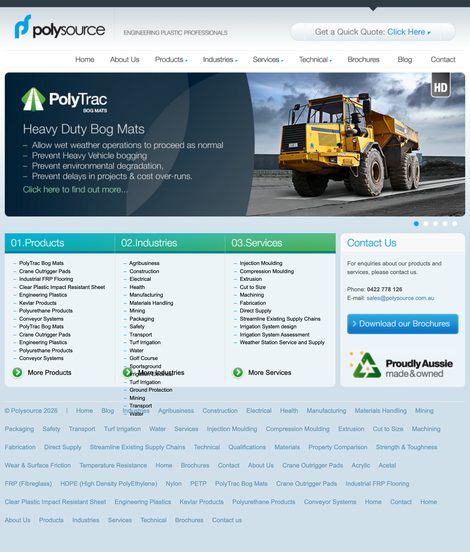
It loads at full desktop width and squashes it onto the screen, so the body text lands at about five pixels tall and you have to pinch and zoom to read a word. For a business whose buyers are standing on a site, sitting in a ute or working on a mine, that last row below is the expensive one.
Said once, then left alone
The software running the site last had a security update in 2013, the login page is open to the public, the administrator username can be read by anybody who asks the site for it, and the folder holding your old brochures can be browsed by anyone who guesses the address.
None of that is a crisis today, and it is the sort of thing found by automated scanners rather than by people. But it is a very good reason not to spend money patching this site up, and a better reason to build one that has no login to attack in the first place.
Five of them, and the first is the biggest
Everything above is the reason. This is the work.
A small site where every page is one you would happily send a customer to. Nothing on it is for a product you stopped supplying. That sounds obvious, and it is still the single biggest change in this whole proposal.
This was your idea on the call and it is the right one. What the mats are made of, the sizes, the load ratings, the fact that you can make any size. Put that on the page properly and the calls that were only ever questions stop being calls.
Readable on a phone without pinching. One correct number that dials the moment it is tapped. A form that lands in the inbox you already work from.
Your front page never states plainly what the business does or where it operates, and Google is never handed a map of the site to follow. Two service lines, described properly, in one place each, is a far stronger position than 62 pages competing with one another for the same attention.
The current site punished you for touching it, so you stopped, and that is why it aged. A new one you can email a change to, and see it done the next day, does not age the same way.
The shape of the job
Decide what stays. Everything for a product you no longer supply comes off.
The small site, written and designed around what is left.
Moved across in one go, keeping your address and your email working.
Then keep it current, so it never gets back to where it is now.
Four things, and they are the whole offer
A small, honest website for two service lines, and somebody whose job it is to keep it that way.
Ground protection and irrigation, given a proper page each, written for the work you do now. Everything else retired.
Materials, sizes, load ratings, what you can make to order, and the questions you answer on the phone all week. Written down once, in public.
Readable on a phone, one correct number that dials when it is tapped, a form that reaches you, and a site Google can finally read properly.
Hosting, backups and security handled, and a person to email when something needs to change. This is the part that stops the new site becoming the old one.
What you are actually getting, page by page
Five to eight pages, written properly, built to be read by a buyer standing in a paddock with one bar of signal.
Two doors, and the work behind each one
The pages
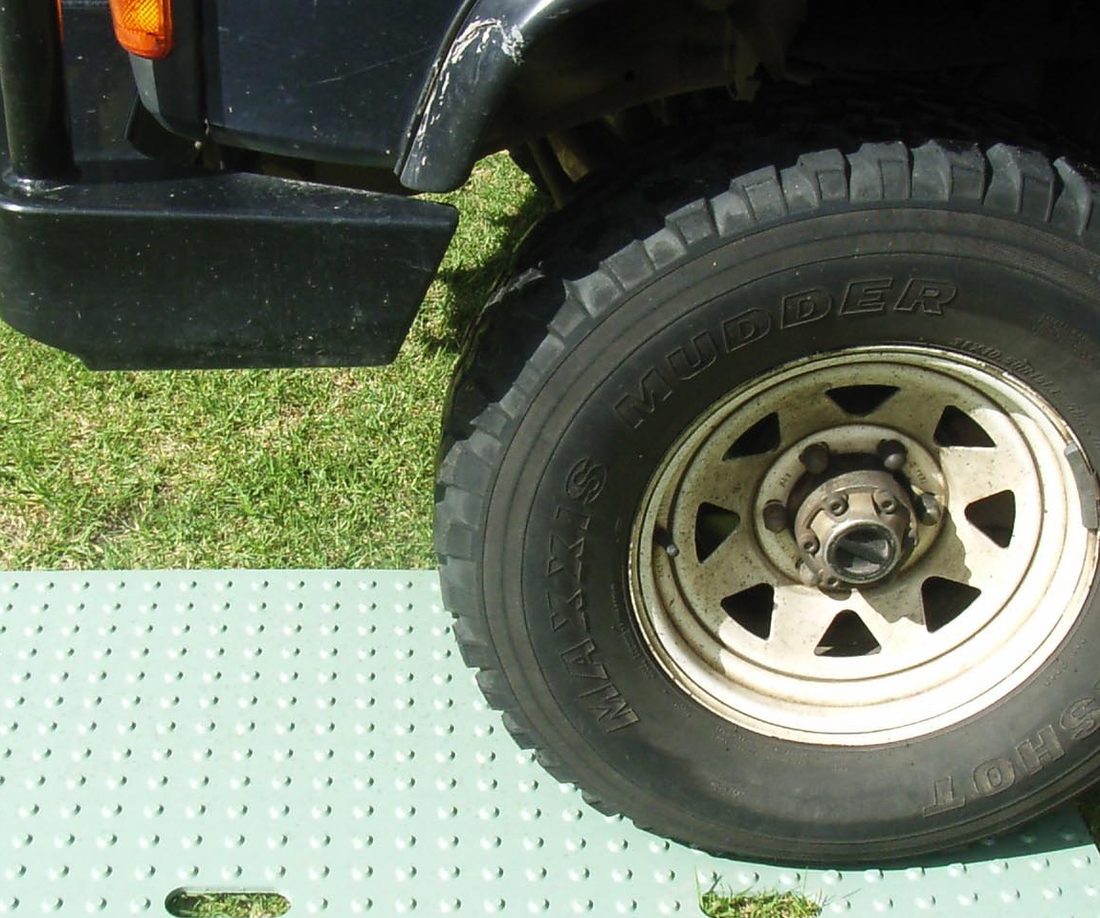
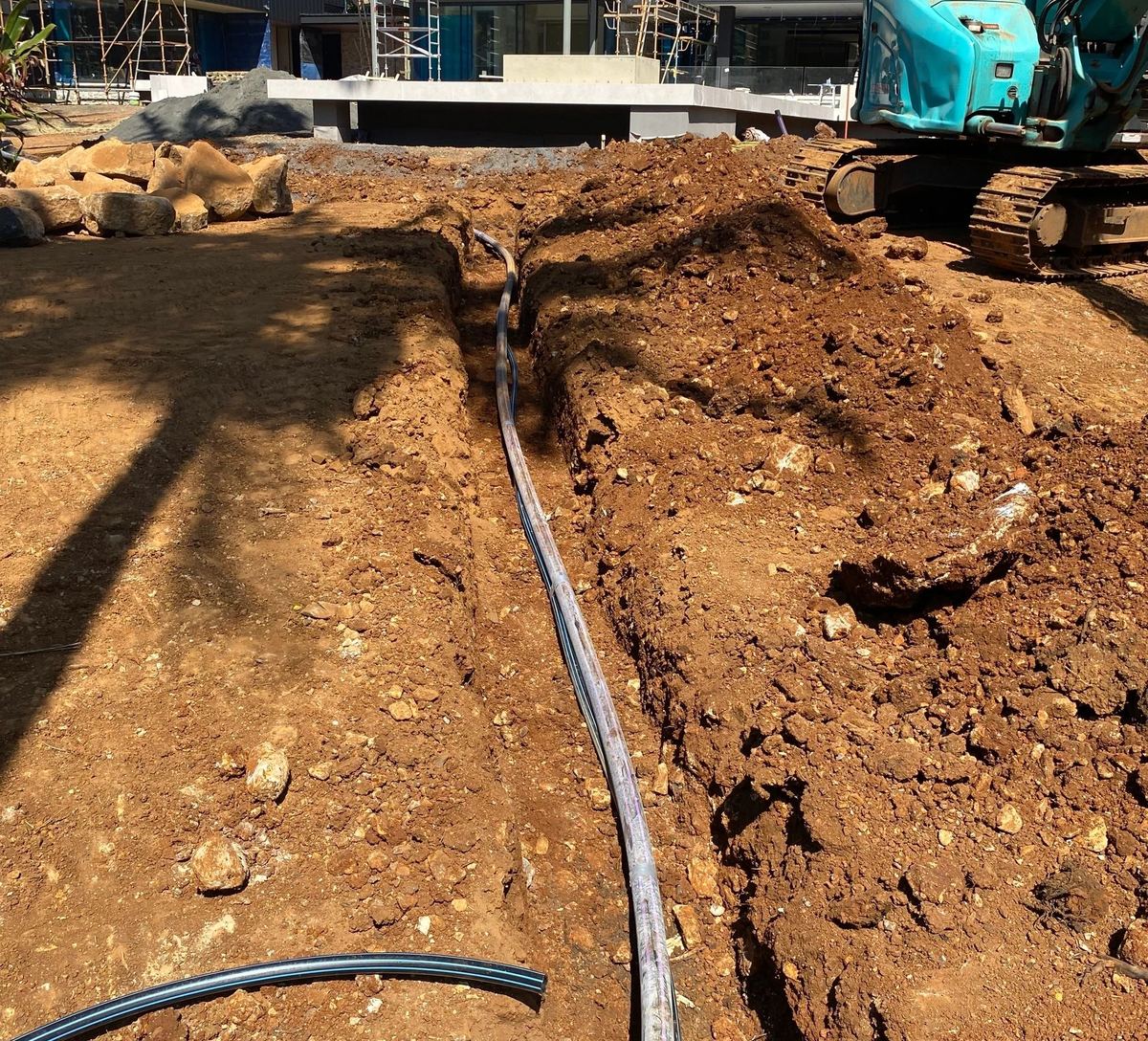
Two clear doors, ground protection and irrigation, and a front page that finally says what Polysource Australia does and where it operates. Somebody who lands here should know within a few seconds whether you are the right call.
Bog mats, crane outrigger pads and gas mats. The material, the sizes, the load ratings, the lead times, and the fact that you can make any size. This is the page that answers the questions you currently answer by phone, and it needs your information to do it, which is the main thing I will be asking you for.
The design half and the supply half, what a job with you actually looks like from first call to installed system, and the kinds of sites you work on. You told me this is the half you are moving further into yourself, so it gets equal weight to ground protection rather than being tucked underneath it.
Short, and about the two of you. Who runs the business, where it is, how long you have been doing this and what you are like to deal with. Not a company history.
One form that lands in your inbox, one correct phone number that can be tapped, and your location. Nothing clever.
You mentioned mines as the work you want more of, because they order in bulk and they pay properly. Somebody at a mine searching for ground protection is not searching for a general supplier, they are searching for their own situation. A page written for them is how you turn up in that search. This is one of the choices in the investment section rather than an assumption.
What is on every page
Tappable, and the same number everywhere.
It goes straight to the inbox you already use, because email is how people reach you today and there is no reason to change that.
Without pinching, and without turning the phone sideways.
Because that is where your customers are.
What this site deliberately does not have
You were clear that enquiries are individual and specific, and that a form and a phone number is how people already reach you. Leaving all of that out is not a saving on quality. It is the right shape for the way you sell, and it is a large part of why this costs what it costs.
The blog goes too. You said you had no interest in writing posts, and I would rather you did not have to.
How it is built, in plain terms
The site is built as finished pages rather than as software that reassembles itself every time somebody visits. That matters to you in three ways.
The page is already made before anybody asks for it, so there is nothing to build while your customer waits.
Which is why hosting sits inside a care plan rather than arriving as a bill of its own.
No login page, no administrator account and no old plugins, so there is nothing for the automated scanners to find.
The failure you are living with right now, where an old system quietly rots until it is unsafe to touch, is not a failure this kind of site can have.
The trade off is honest, and it is why the care plan matters: changes go through me rather than through a screen you log into. Given you told me you would not be editing it much anyway, and that editing is exactly what broke the last one, I think that is the right trade for you rather than a compromise.
Six changes, all of them missing right now
None of this is complicated, and every one of them is part of the build rather than a service sold on top of it.
In words a search engine can read.
Instead of three, so nobody has to guess which page is the real one.
So it stops guessing.
Which is by product and by problem, not by industry category.
Instead of one that stopped recording three years ago.
So that for the first time you can see the actual words people type before they find you.
What I need from you
What sets the pace is the product information, and only you have it. Specifically: the ground protection specifications, the irrigation brands and systems you design and supply with, which of the current products you genuinely still supply, and which of the three phone numbers are live.
Photographs too, and you mentioned your brother in law shoots, so anything he can take of real mats on real sites is worth more than anything bought from a library.
The part that decides whether this still looks good in three years
Your last website did not fail on the day it was built. It failed slowly, because there was never anybody whose job it was to change it.
Nothing dramatic happened
Somebody built you a perfectly reasonable website. Then a supplier closed, and the page stayed. Then a product line stopped, and the page stayed. Then a phone number changed, and the button kept the old one. There was just never a simple way to make a small change, so small changes stopped being made. That is what "terrible" actually looks like from the inside.
A care plan is the fix for that, and I want to explain it properly rather than listing it as a line on an invoice, because most people are never told what they are actually paying for.
The site is hosted, backed up and monitored. If it goes down, I know before you do. If something breaks, fixing it is my problem and not a phone call you have to make. You never receive a separate hosting bill, a renewal notice or a warning email from a company you have never heard of.
You email me the change. A new size, a new product, a price, a photo, a paragraph that is no longer true. I make it and it is live, usually the same day and at worst the next business day. There is no screen for you to learn, no layout for you to break, and no invoice for a small job. This is the part that actually solves the problem you described on the phone.
On the top plan the site is worked on to bring enquiries in, rather than just sitting there being correct. New pages written for the work you want more of, the search side kept up so that both Google and the AI assistants people now ask have something current to read about you, your Google listing kept accurate, and a short page each month telling you plainly what changed and what it did.
What "unlimited changes" honestly means
Changes to the site you already have. Text, prices, sizes, load ratings, photographs, a product swapped in, a product retired, your contact details, and anything on the site that has stopped working. Send them one at a time or send me ten at once, with no quote to approve and no minimum standing in the way.
New pages. Unlimited changes means unlimited changes to the pages that exist, and an extra page is a priced thing at $500 each. If you want new pages written for you every month as part of the monthly, that is the Found plan, and it is exactly what it is for.
A second website. An online store, a customer login or a system that talks to your accounting software is a new project, and I would quote it as one.
To be straight about it, a plan is not optional. The site has to be hosted, kept secure and backed up by somebody, and that is what the $49 buys. What is optional is how much further than that you want to go. All three run month to month with fourteen days notice, nothing locks you in, and you can move up or down a plan whenever it suits you.
A website is not a thing you buy once. It is a thing that is either being looked after or slowly going out of date, and there is no third state. You have spent thirteen years in the second one.
Which is the reason I push this harder than the buildThree ways to build it, three ways to keep it
I said I would put a few options together, so here they are, along with what I would choose if it were mine.
The build, one off
$3,500
Five pages. Home, ground protection, irrigation design and supply, about, contact. Ground protection lives on one page with all three product families on it. This is a complete, finished website and it is the shape you described on the call.
$5,000
Eight pages. Everything in option one, plus a page each for bog mats, crane outrigger pads and gas mats, and a page written for mining and resources.
$7,500
Everything in option two, plus pngolf.com.au rebuilt as a high level showcase for the golf course construction work. Somewhere to properly show off what you have built, with the two sites pointing traffic at each other when it makes sense, so the golf work is not competing for room with ground protection.
The second site has to be hosted too, so this option adds $49 a month on top of whichever care plan you choose. On Live that is $98 a month for the two of them.
Every option includes the design, the writing, the photography selection and tidy up, the move across from the old site, the retirement of everything you no longer supply, setting up the visitor count and the Google tools, and two rounds of changes before launch.
Why I recommend option two
Somebody who needs crane outrigger pads types "crane outrigger pads", and the page they should land on is a page about crane outrigger pads, not a page about ground protection with a section on them. One page per product family is the difference between being an answer and being a maybe.
You said yourself that is the work worth chasing, and a mining page is how you get in front of somebody looking for exactly that. Option one cannot do that, because there is nowhere for it to live.
Eight pages is still a small website. It is the same site as option one with the product detail given room to breathe instead of being crammed into one page. If you would rather start with option one, that is a perfectly good decision and not a lesser one, and individual pages can be added later at $500 each.
Option three is that same eight page site with pngolf.com.au rebuilt beside it, and it is only worth doing if the golf course construction work is something you actively want to push. It is a second website, so it carries a second $49 a month for its hosting.
Keeping it, monthly
The site has to be hosted, kept secure and backed up by somebody, so a plan is not optional. Which one is entirely yours, and you can move between them month to month with fourteen days notice. The one I would pick for you is the cheapest, and the arithmetic for that is underneath.
For when the site is right on the day it goes live and does not need touching often. On your job, that is very likely you.
What the monthly coversBilled as they come. $100 an hour, three hours minimum, so $300 for a batch.
None are included in the monthly. Save them up, send me a batch, and the three hour minimum works in your favour instead of against you.
The site is looked after and you only pay for work when there is work. Change the site once or twice a year and this is the cheaper plan, by a fair margin.
For when the site changes often enough that stopping to quote each job is the thing that stops it happening.
What the monthly coversIncluded, unlimited, on the site as it stands.
Text, prices, sizes, load ratings, photographs, a product swapped in, a product retired, your contact details, anything that has stopped working. A brand new page is not a change, it is a new page, and those stay $500 each.
It removes the decision. Nothing to weigh up and nothing to approve, so the small fixes actually get made. It pays for itself from about four batches of changes a year.
For when the site has to bring work in, rather than sit there being correct.
What the monthly coversIncluded, and new pages written for you on top of them.
Everything Looked after covers, and then pages that did not exist before. This is the only plan where a new page arrives without an invoice attached to it.
This is the plan that gets you found. When somebody types crane outrigger pads into Google, or asks an AI assistant who supplies bog mats in northern New South Wales, this is the work that puts you in the running to be the answer. A marketing spend, not a maintenance one.
Because I do not think you are going to have a great deal to change once this is built. It is being written for the business as it runs now, and bog mats and irrigation do not move quickly.
So here is the arithmetic in full. Live is $588 a year, and a batch of changes is $300, because it is $100 an hour with a three hour minimum. Looked after is $1,788 a year, flat. One batch a year on Live costs you $888. Two batches costs $1,188. Four batches a year is the point where the two plans cost exactly the same, $1,788 either way. Below four, Live is cheaper, and at once or twice a year it saves you about six hundred dollars.
Looked after becomes the better plan the moment you are changing the site more often than that, and moving up is one email.
Found is the plan for when bringing in new enquiries becomes the point, rather than keeping a correct site correct. It is where the mining work would be chased from, and I would be glad to move you onto it when that is the priority. It is not where I would start.
Your domain name stays yours, and it is not part of any plan. If you would rather not think about it, I can register and renew it for you at whatever it actually costs.
How it is paid
Invoices are due within seven days. Two rounds of changes are included before launch, and any fixes in the first 30 days after launch are free. The care plan starts on launch day, runs month to month, and can be cancelled with fourteen days notice.
If you would rather not pay it in two parts, the build can be spread over twelve months instead: $350 a month for option one, $500 a month for option two, or $750 a month for option three. That comes to more overall, so it is a cash flow choice rather than a saving.
About four weeks, and the first week is the one that matters
The build is quick. Deciding what stays is the part worth taking care over.
A few questions answered, by email or on the phone, to agree exactly which products carry across, and to collect the specifications and the photographs.
Design and writing, then the pages themselves, then the first version for you to walk through and mark up.
Changes made, the new site put in place of the old one on the same web address, old pages pointed at their new homes so nothing that people have bookmarked breaks, and the visitor count and Google tools switched on.
Hosting, backups and changes from launch day onward, on whichever plan you choose.
The exact sequence will be confirmed once those first questions are answered.
One decision, then it is my job
Only the first step is yours.
Reply with the build option and the care plan you want. If none of them is quite right, tell me what is off and I will adjust it.
By email or on the phone, whichever is easier for you. About half an hour of your time either way, and it is where the site is really decided. Five things I need from you:
Deposit invoice, then phase one begins the same week.